


AI Music Trends in 2026
Whether we like it or not, AI seems to be here to stay. It has gradually been invading every part of our lives, impacting anything from art to work to social media and beyond. AI has been at the forefront of conversations in our personal and professional lives, drawing attention to all the ethical dilemmas and environmental problems it has caused. While the platforms continue to be rife with ethical and environmental challenges, like stealing artists' work and accelerating carbon emissions, AI is still being used by companies and individuals to aid in a variety of things. The music industry is one of many in entertainment navigating changes and challenges that AI is bringing. Like what Lauren DiGiovanni discussed in Pop Passion's previous article, "What's Going On with Music and AI in 2025," it's no new thing that creators have been using AI to generate lyrics and instrumentals, but it's important to stay up to date on new developments. To shed some light on how AI usage has been evolving in the music industry, here's a look into the emerging "AI Music Trends in 2026."
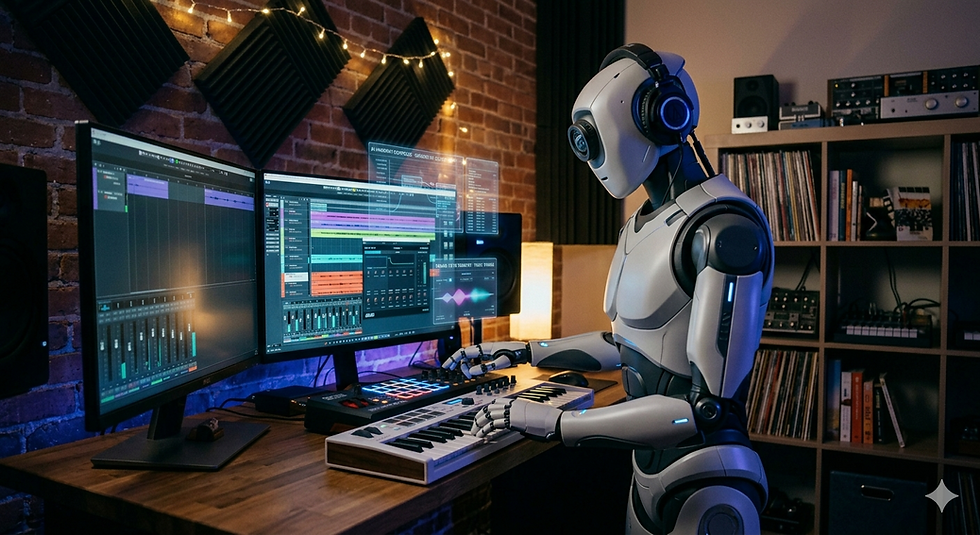
One of the most concerning developments in AI usage is the amount of music being created that is entirely AI generated. Creators have been using platforms like Suno AI and Udio to generate songs where every aspect, like lyrics, vocals, instrumentals, and production, are synthesized by artificial intelligence. This started as a novelty but has quickly become a problem as AI-generated songs have been topping charts and challenging human creation. Some examples of AI-generated artists are The Velvet Sundown, Breaking Rust, and Zania Monet.

Photo Credits: Adobe Stock
Despite the increase of AI being integrated into music creation, music industry leaders have been making efforts to regulate AI usage and shift towards an approach that focuses more on AI as a collaborative tool instead of something to generate fully automated songs. In 2026, AI is becoming more of a creative partner as over 60% of music producers use AI to aid in audio cleanup, ideation, stem separation, and mixing. There also has been an increase in using AI for mashups, birthing a trend that aids in creating remixes and combines unexpected genres, like country and metal.
Further regulating AI's usage and combatting the challenges it has caused, streaming platforms and distributors have been active in pushing for transparency that will protect human creators and prevent royalty dilution. Distributors like DistroKid have started requiring creators to disclose if their tracks are AI-assisted and categorize the level of AI generation. Spotify has begun beta-testing AI-credit labels directly on tracks, so listeners know how a song was made. Streaming services like Deezer have also updated their policies to label fully AI-generated songs to prevent the dilution of main discovery algorithms.
As for the legal landscape of using AI, labels have been making strides to enforce copyright protections. Startups have been facing high-profile infringement lawsuits from major labels as issues like voice cloning become more prevalent. Despite the obvious issues with AI usage and copyright, licensed AI models are still becoming a norm in the music industry as the likes of Universal and Warner Music form partnerships and licensing agreements with AI companies like Udio.
How do you feel about AI usage in the music industry? Do you think it should be used during the creative process? Let us know on our socials!
Written By Cheyenne Johnson
*copyright not intended. Fair use act, section 107.


